

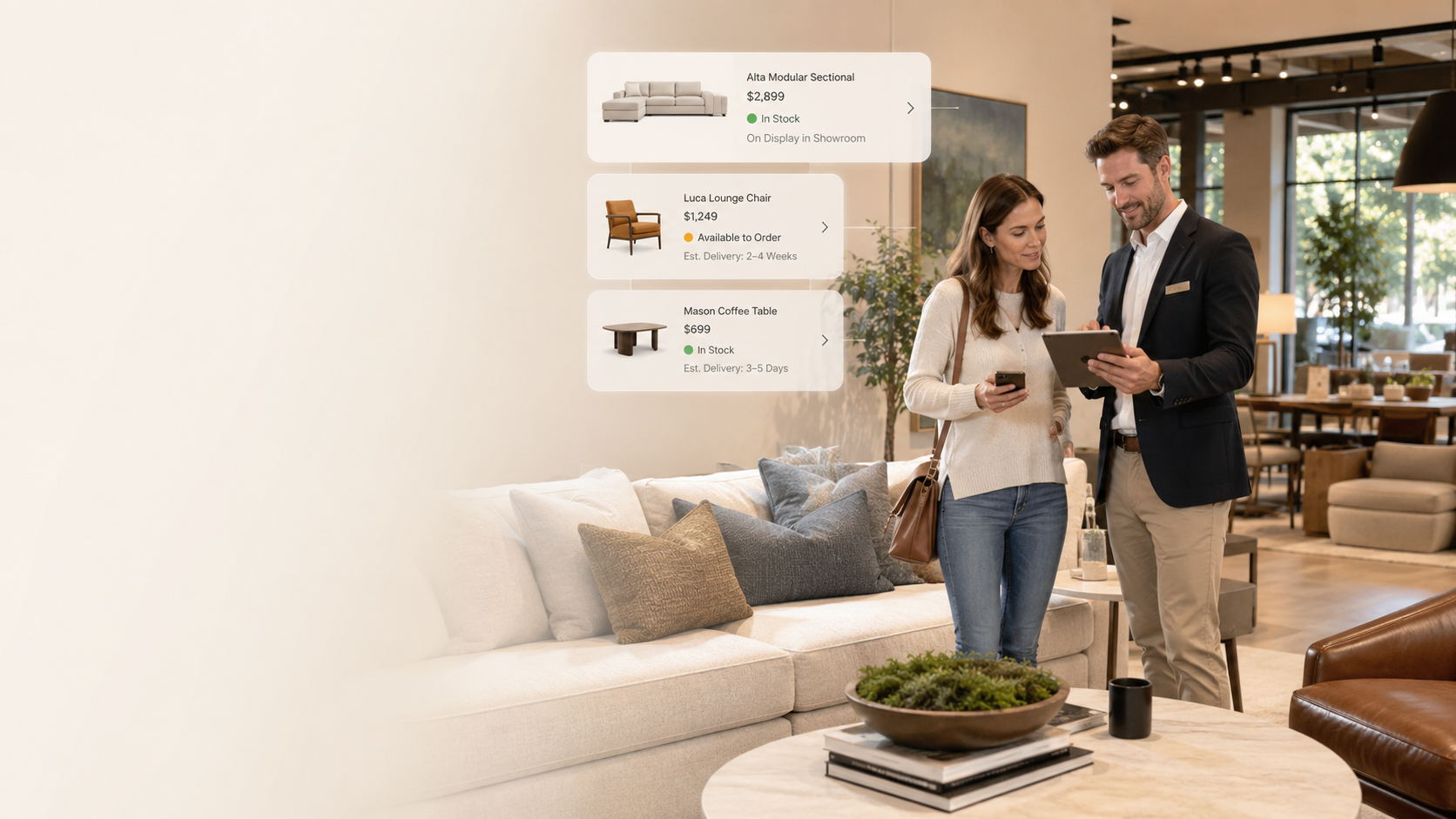
Availability That Builds Confidence
Furniture shoppers do not just browse for style.
They browse for confidence.
They want to know if the sofa fits their room. If the fabric works. If the table is right for their family. If the piece is worth the investment.
But before they commit, one question often matters more than the rest:
Can I actually get it?
Availability has become one of the most important parts of the furniture shopping experience. Not because it is flashy. Not because it is new. Because it directly affects trust, momentum, and conversion.
A shopper may love the product.
But if they cannot tell whether it is in stock, available to order, on display, ready for delivery, or weeks away, hesitation creeps in.
And hesitation kills momentum.Availability Is More Than Inventory
In many retail categories, availability is simple. In stock, or not.
Furniture is different.
A product may be in stock at the warehouse. On display in a showroom. Available by special order. In one fabric but not another. Discontinued. Available from the vendor but not in the retailer's local inventory. Deliverable this week, next month, or not at all.
That complexity is normal inside a furniture business.
To the shopper, it feels like confusion.
And when the website does not communicate availability clearly, shoppers are left to guess.
That creates friction.
Shoppers Are Looking for Certainty
A furniture purchase is not casual. It is a higher-ticket decision. It often involves multiple decision makers, room measurements, delivery timing, financing, and style preferences.
So shoppers are not just asking whether they like the piece. They are asking:
- Can I see it in person?
- Is it available locally?
- Can it be delivered to my home?
- How long will it take?
- Is this item still active?
- Can I trust what the website is telling me?
- Should I visit the store, or keep looking somewhere else?
Availability answers those questions before the shopper has to ask.
The Website Has to Reflect the Retail Reality
Most furniture retailers already know their business is local.
Stores matter. Showrooms matter. Sales associates matter. Warehouses, delivery teams, and vendor relationships matter.
The problem is that many websites do not reflect that reality.
They show products, but not context. They list items without making it clear whether they are stocked, special order, on display, or locally available. They create interest without giving the shopper the confidence to take the next step.
That is a missed opportunity.
Your website should not operate as a disconnected product catalog. It should reflect how your business actually sells.
Availability Drives Action
When availability is clear, shoppers know what to do next.
If an item is in stock, they can move closer to purchase. If it is on display, they have a reason to visit the showroom. If it is available by special order, they understand the path. If delivery timing is clear, they can decide with confidence. If the product is not available, the retailer has a chance to guide them to the next best option.
This is where availability becomes more than operational data.
It becomes merchandising. It becomes conversion strategy. It becomes part of the customer experience.
See it in Store Still Matters
For furniture retailers, one of the most powerful availability signals is whether an item can be seen in a showroom.
Furniture is tactile. Shoppers want to sit on the sofa. Feel the fabric. See scale, finish, color, and comfort in person.
A product that is available to view in store can move a shopper from online research to showroom visit.
That is not a failure of ecommerce. That is omnichannel working the way furniture retail actually works.
The website creates the interest. The showroom builds the confidence. The associate helps close the sale.
But that journey only works if the website clearly connects the shopper to the store.
Local Availability Creates Local Advantage - Proximity to the product!
National ecommerce players can show endless products.
Local retailers can show relevance.
That is the advantage. A furniture retailer can tell a shopper what is available near them, what is on display, what can be delivered, and what their local team can support.
That kind of local visibility is difficult for broad marketplaces to replicate. It gives the retailer a reason to be chosen.
But only if the website makes it clear.
The goal is not to show everything. The goal is to show the right products with the right context.
Availability Also Protects Trust
Nothing damages confidence faster than a broken expectation.
A shopper sees a product online, gets excited, then finds out it is not actually available. Or they call the store and hear something different than what the website showed. Or they place an order and later learn the timing is not what they expected.
Those moments create frustration. They also create doubt.
If the shopper cannot trust the website, they may question the entire experience.
That is why availability data needs to be accurate, consistent, and connected to the systems the retailer already uses to run the business.
The Point-of-Sale Connection Matters
For many furniture retailers, the point-of-sale system is the source of truth for availability, inventory, pricing, store activity, and order flow.
If the website is disconnected from the POS, the online experience drifts away from retail reality.
That creates gaps. The website may promote products the business does not want to push. It may miss locally available inventory. It may fail to support store quotes, reservations, or showroom activity. It may create manual work for the team.
When the website and POS are connected, the experience becomes more useful for both sides.
The shopper gets better information. The retailer gets better control.
Availability Is Part of the Shopper Journey
The furniture journey rarely happens in one session.
A shopper may browse on their phone. Come back later on a laptop. Visit the store. Talk with an associate. Compare options. Measure at home. Return to the site. Complete the purchase online or in store.
Availability needs to support that movement. It should help the shopper keep going, not force them to restart.
That means online carts, store quotes, product visibility, inventory, and purchase options need to work together. The retailer should be able to carry the shopper's intent across channels.
That is where availability becomes part of a bigger omnichannel strategy.
The Best Websites Reduce Uncertainty
A strong furniture retail website does not simply display products. It answers the questions that create hesitation.
Is this available? Can I see it? Can I get it? How do I take the next step? Can I trust this retailer?
The more clearly those questions are answered, the more confidence the shopper has.
And the more confidence the shopper has, the more likely they are to act.
The Takeaway
Availability is not just an operational detail. It is a confidence builder.
It is one of the most important signals a furniture retailer can provide online, because it helps shoppers understand what is possible, what is local, and what to do next.
For furniture retailers, the website should do more than show products. It should connect product interest to real retail execution.
Because shoppers are not just looking for furniture.
They are looking for confidence. And clear availability helps them find it.
Retail on,